
Understanding What Is Really Happening To Our Children – Free PDF
$0.00
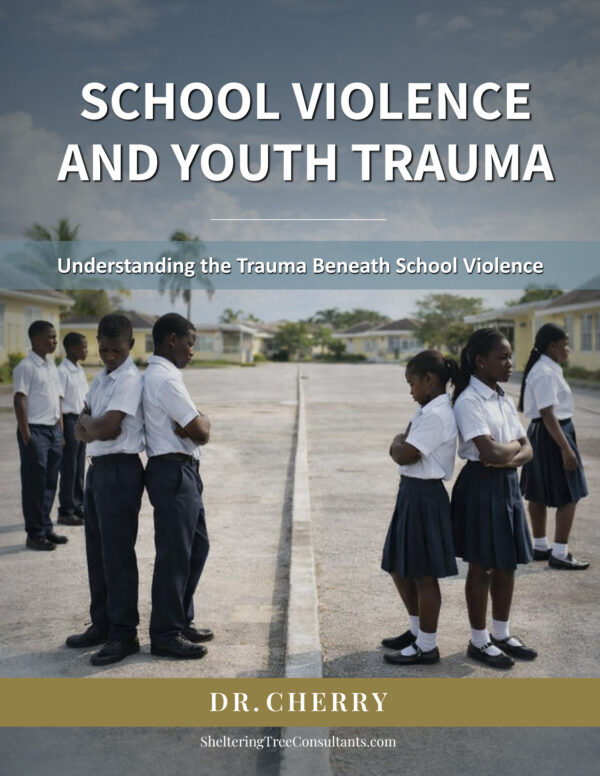
A practical, trauma-informed guide that explains how youth violence often emerges from nervous system overload rather than intent or defiance. Written to help parents, educators, school leaders, and communities recognize warning signs early, reduce risk, and restore safety through regulation, structure, and coordinated support.
School Violence and Youth Trauma reframes one of the most urgent and misunderstood crises facing schools and communities today. Rather than viewing youth violence as a discipline failure or moral breakdown, this guide explains what happens when developing nervous systems are overwhelmed by chronic stress, trauma, instability, and unmet emotional needs.
Written by Dr. Cherry, a developmental psychologist specializing in grief and trauma support, this guide helps readers understand why many children who engage in aggressive or harmful behavior are not choosing violence. They are responding to overload. When a child’s body does not feel safe, behavior becomes communication, and survival takes priority over learning, reasoning, or impulse control.
This resource is designed for parents, educators, school leaders, youth workers, faith leaders, and policy makers who want to respond effectively when warning signs appear. Inside, readers will learn how trauma alters brain function, how stress accumulates across home, school, and online environments, and why traditional punishment alone often escalates rather than resolves risk.
The guide also offers practical, trauma-informed tools for prevention and response, including de-escalation strategies, regulation practices, early warning indicators, and a structured 30-60-90 day framework to help schools restore safety and stability. The emphasis is on regulation, dignity, and coordinated support, rather than fear-driven reactions or zero-tolerance approaches.
This publication is for educational and informational purposes and is not a substitute for professional mental health care or emergency response. In situations of immediate danger, readers are encouraged to follow established safety protocols and seek urgent assistance.
These are not bad kids.
They are overwhelmed nervous systems shaped by chronic stress.
And systems can be repaired when adults respond with structure, safety, and skill.
Reviews
There are no reviews yet.